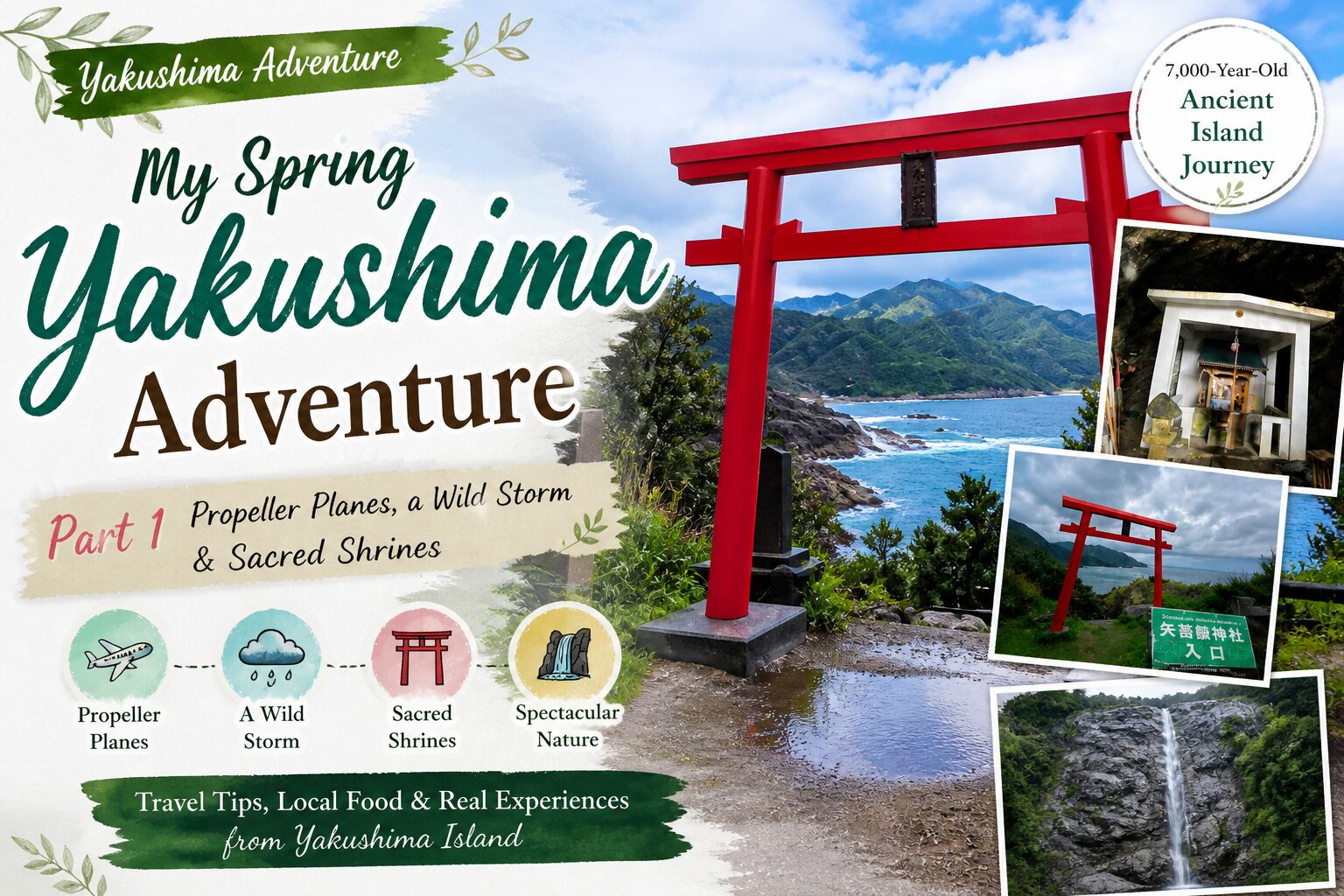
Planning a trip to Yakushima Island, Japan? This is Part 1 of my spring Yakushima travel diary — a first-hand account of visiting this UNESCO World Heritage island in early April. In this post: how I flew in from Shizuoka, what the propeller plane ride is actually like, where we stayed, surviving a typhoon-level storm on Day 2, the best local food to try, and the top coastal shrines to visit. Whether you’re putting together a Yakushima itinerary or just wondering what a spring trip really looks like — this is for you.
Early April. A solo mission to meet a 7,000-year-old tree.
I live at the foot of Mt. Fuji in Shizuoka — so when I decided to visit Yakushima Island, I had two airport options: Shizuoka Fuji Dream Airport or Haneda in Tokyo. The travel times were surprisingly similar, but this time I chose Shizuoka, flying via FDA (Fuji Dream Airlines) to Kagoshima, then hopping onto a propeller plane for the final stretch to Yakushima.
It was my very first time on a propeller plane. I’ll be honest — I was nervous. 😨
Sure enough, the turbulence was real. I gripped my seat, held my breath… and landed safely about 30 minutes later without a single problem. ✨ Looking back, it was actually kind of exciting.
I departed Shizuoka at 12:50 and touched down in Yakushima at 16:00. The moment I stepped off the plane, I was hit by the most incredible smell — green, fresh, like the steam rising off boiling vegetables. 🥦 That’s the only way I can describe it. The air here is just different.
- ✈️ How to Get to Yakushima: Flights & Ferry Options
- A Chaotic Start (And a Lesson in Double-Checking)
- Day 2: A Storm, Souvenirs & Surprise Sunshine
- Where to Eat in Yakushima: Fresh Sashimi & Local Soba at Miyanoura Port
- Shrine Hopping in Yakushima: Hidden Coastal Shrines Worth Visiting
- Final Stop: Senpiro Falls (千尋の滝)
✈️ How to Get to Yakushima: Flights & Ferry Options
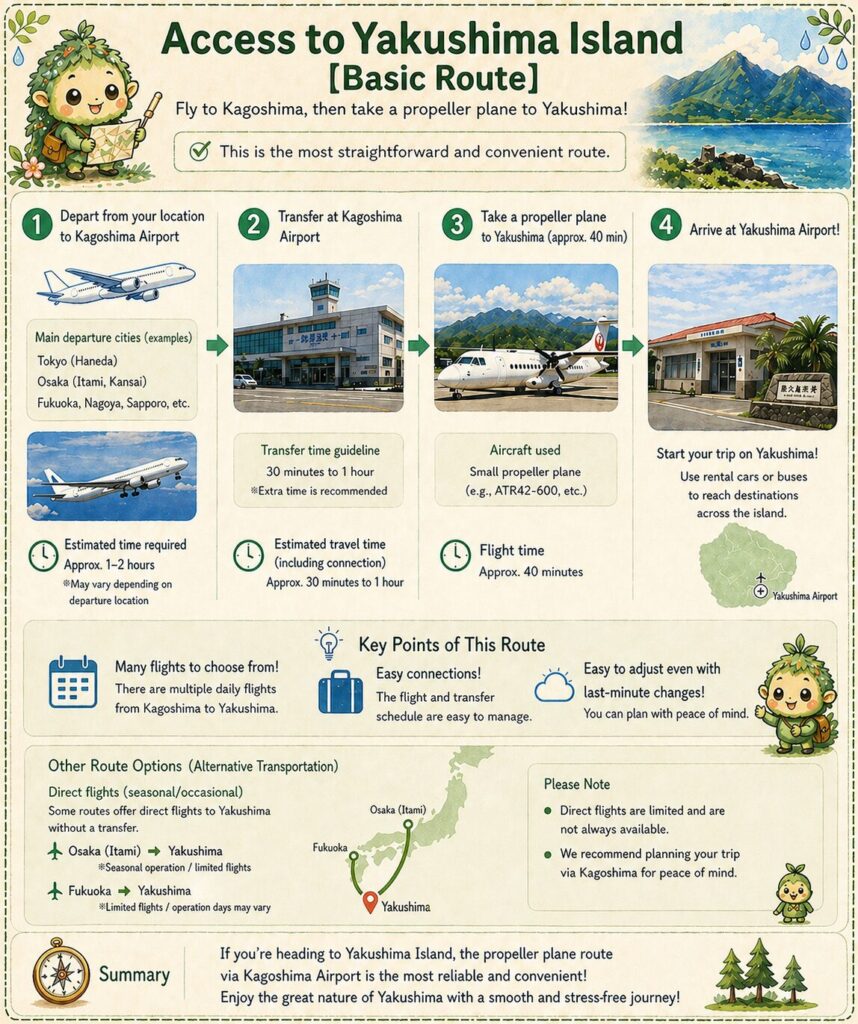
Yakushima is accessible by air or high-speed ferry from Kagoshima. Flying is fastest — most routes connect through Kagoshima Airport. Round-trip airfare typically runs ¥20,000–¥50,000 depending on season and how early you book. Spring is peak season, so booking 2–3 months ahead is wise. The high-speed ferry (Toppy / Rocket) from Kagoshima Port takes about 2 hours and is a budget-friendly alternative.
💡 Tip: Once on the island, renting a car is almost essential. Public buses exist but run on limited schedules. Most sightseeing spots, trailheads, and restaurants are spread around the island — a rental car gives you the freedom to explore at your own pace. Book your rental in advance, especially during spring and Golden Week.

A Chaotic Start (And a Lesson in Double-Checking)
At the airport, a rental car staff member was waiting for us — along with a bit of chaos. Somehow, our group had ended up with a double booking across four cars. Four. 😓 One company had to be turned away with apologies and a lot of scrambling. It was a good reminder: when you’re booking with a group, always confirm together. 🙏
Despite the rocky start, we made it to our hotel: Yakushima Green Hotel, where we’d be staying for 3 nights. It’s centrally located near Miyanoura Port — a solid base for exploring the island by rental car.
Day 1 was simple — unpack, relax, and enjoy dinner. The meal was traditional Japanese cuisine, and the highlight was a whole flying fish (トビウオ), deep-fried and served one per person. 🐟 Alongside fresh sashimi and local sweet potato shochu, it was a perfect first night on the island.
🏨 Where to Stay in Yakushima
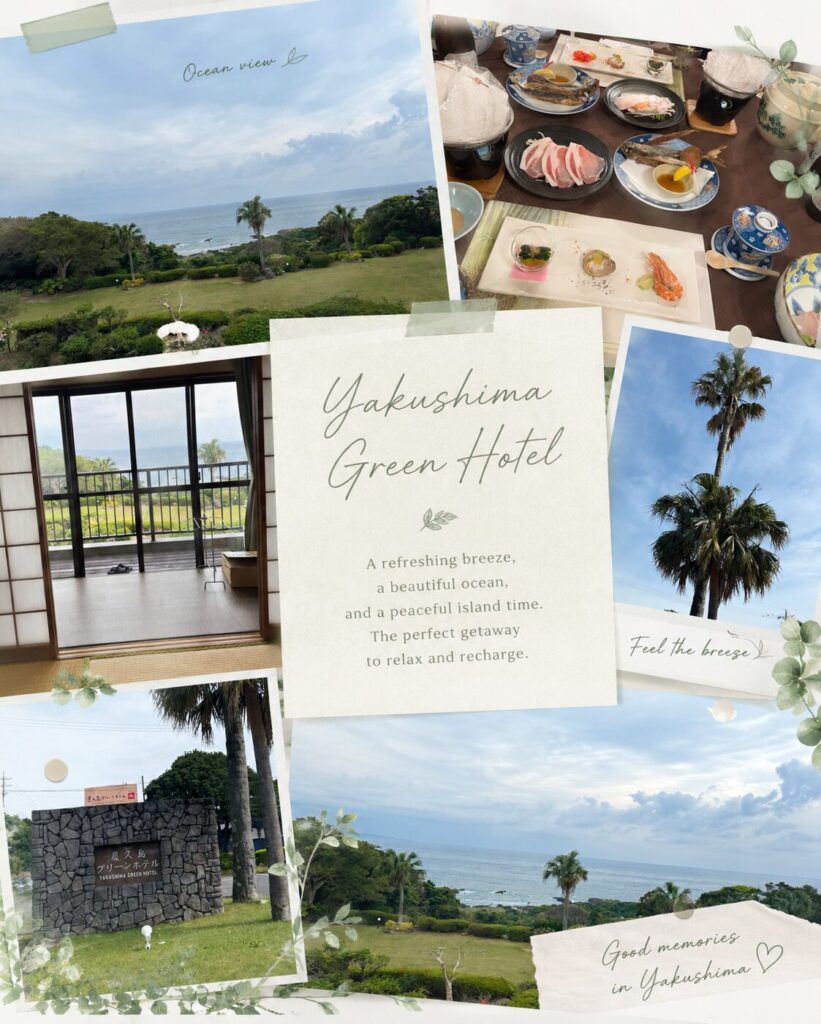
Most accommodation clusters around Miyanoura (main port — restaurants, supermarket, ferry terminal) and Anbo on the east coast. For first-time visitors, staying near Miyanoura is the most convenient choice. We stayed at Yakushima Green Hotel for 3 nights and found it clean and well-located. Book early if visiting in spring — cherry blossom season and Golden Week fill hotels fast.
Day 2: A Storm, Souvenirs & Surprise Sunshine
The original plan had Jomon Cedar hiking on Day 2. But the forecast was 100% rain — so we pushed the hike to Day 3 and rescheduled Day 2 for sightseeing and shopping.
What we didn’t expect was 120% rain. A typhoon-level storm. 🌀💨 Water was flowing down the roads like rivers. We looked at each other and decided to go out anyway.
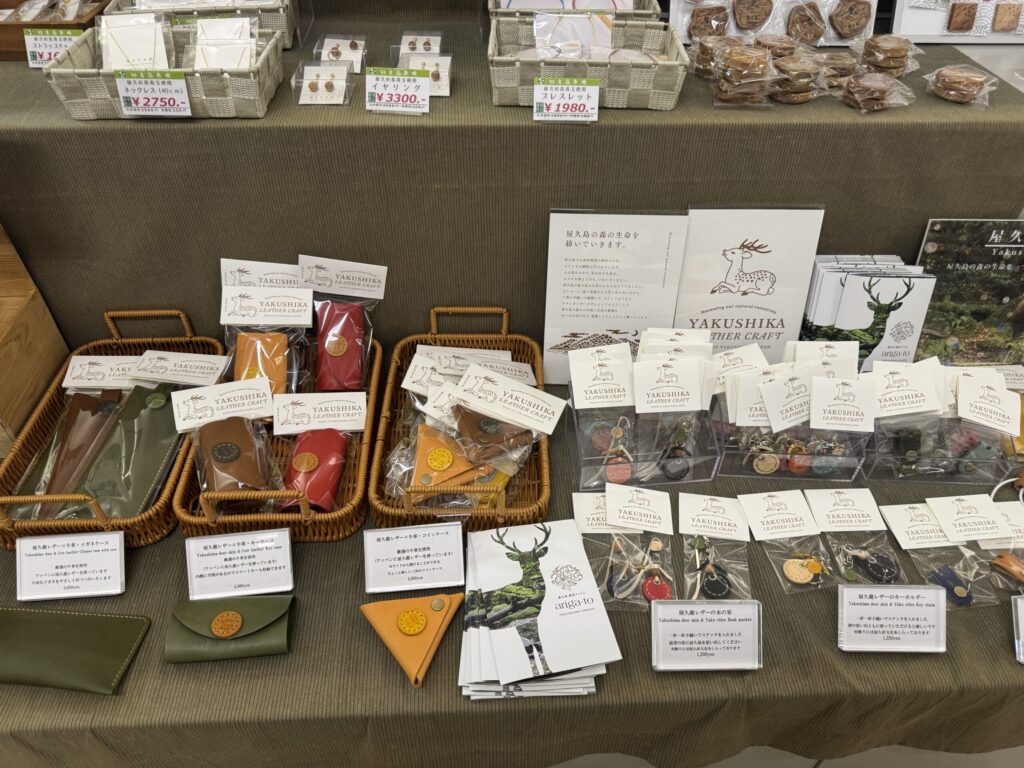
Our first stop was a large souvenir shop just five minutes from the hotel. Running from the car to the entrance soaked us instantly. And honestly? Now it’s one of my favorite memories. 😄
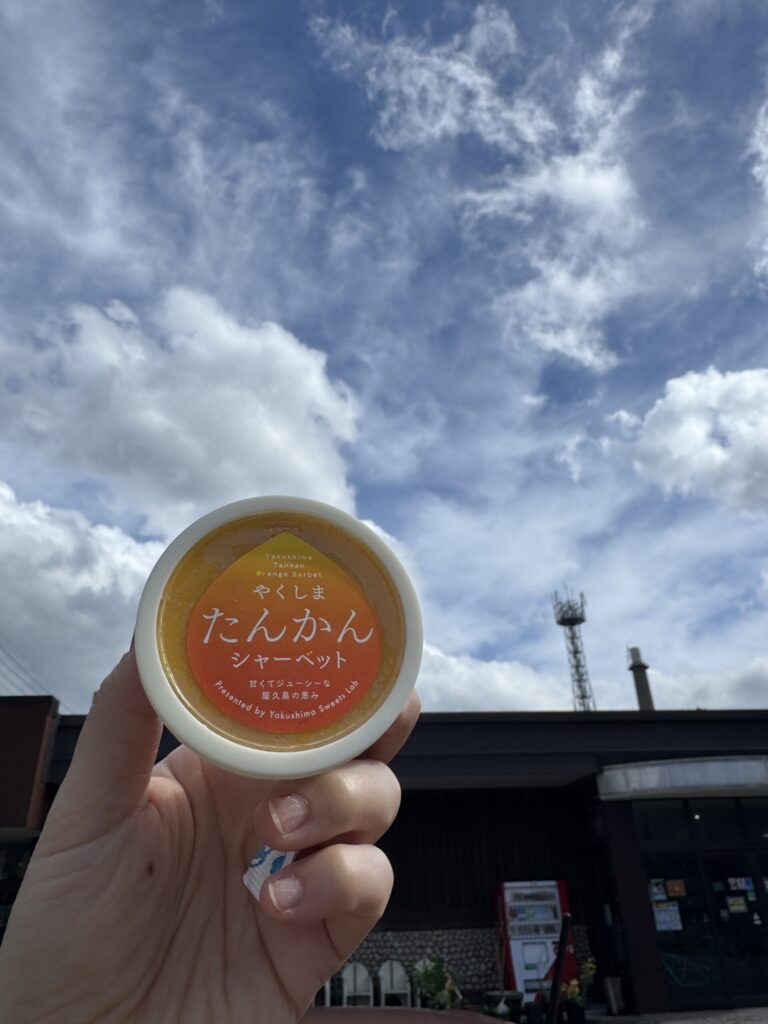
Yakushima local specialties to look for:
- Tankan — a sweet, fragrant citrus fruit➡️Shop Tankan Citrus on Amazon
- Yakushika (Yakushima deer) meat and leather goods
- Yakusugi cedar crafts — beautiful woodwork from ancient trees
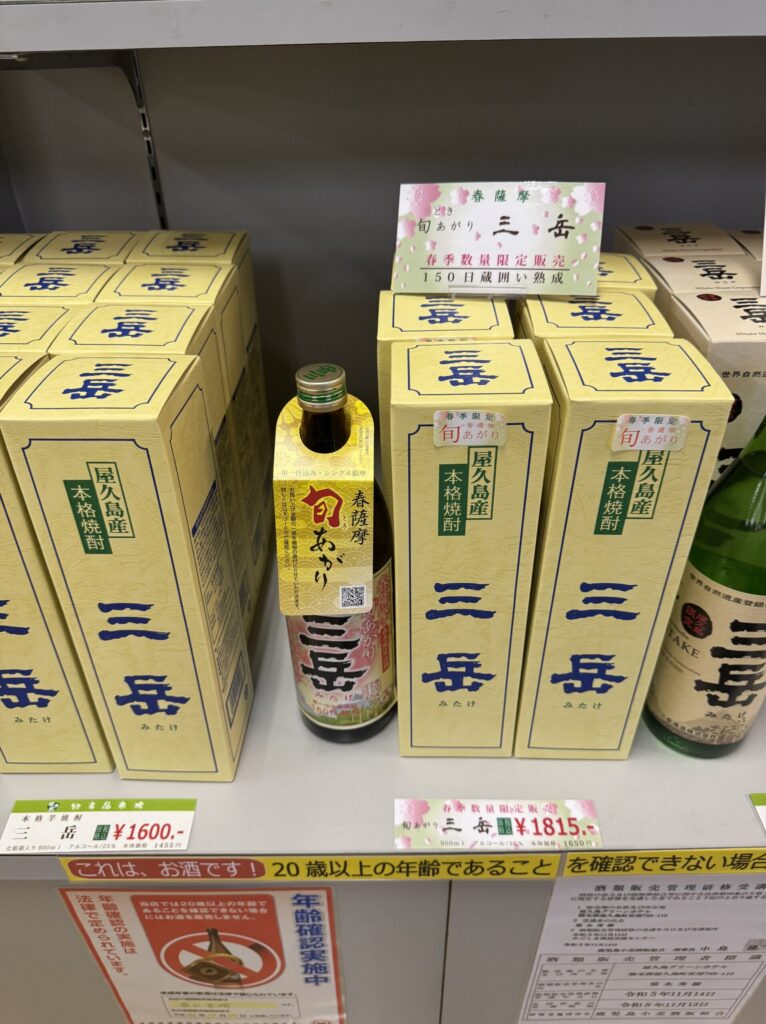
- Mitake — locally distilled sweet potato ➡️shochuBuy Mitake Shochu on Amazon
- Natural salt from the island
- Kokuto (black sugar) from nearby Tanegashima & Amami Oshima
I ended up buying a lot of shochu — for myself, family, and relatives — and shipped it all home in a box. 📦✨
Where to Eat in Yakushima: Fresh Sashimi & Local Soba at Miyanoura Port
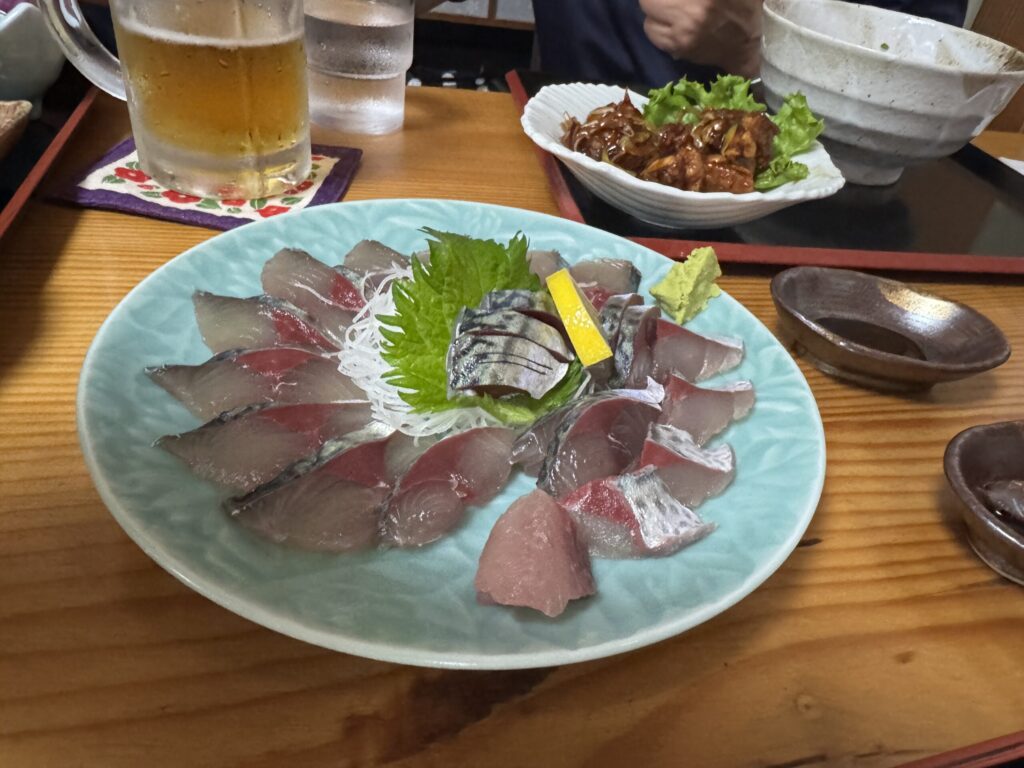
For lunch, we headed to 📍Shokujidokoro Itsuki (樹) near Miyanoura Port. The menu featured local specialties I’d never tried before:
- Kubore Saba (首折れサバ) — a type of mackerel known for its incredible freshness, eaten raw as sashimi
- Flying fish sashimi
- Warm soba to warm up after the cold rain
Kagoshima-style soy sauce is noticeably sweeter than what I’m used to. It worked beautifully with the sashimi — but my personal favorite way to eat it was with natural Yakushima salt and wasabi. Simple and perfect. 🐟
By the time we finished lunch, the storm had passed. Blue sky appeared. We felt incredibly lucky. ☀️
Shrine Hopping in Yakushima: Hidden Coastal Shrines Worth Visiting
With the weather clearing, we headed out for some shrine visits. ⛩️
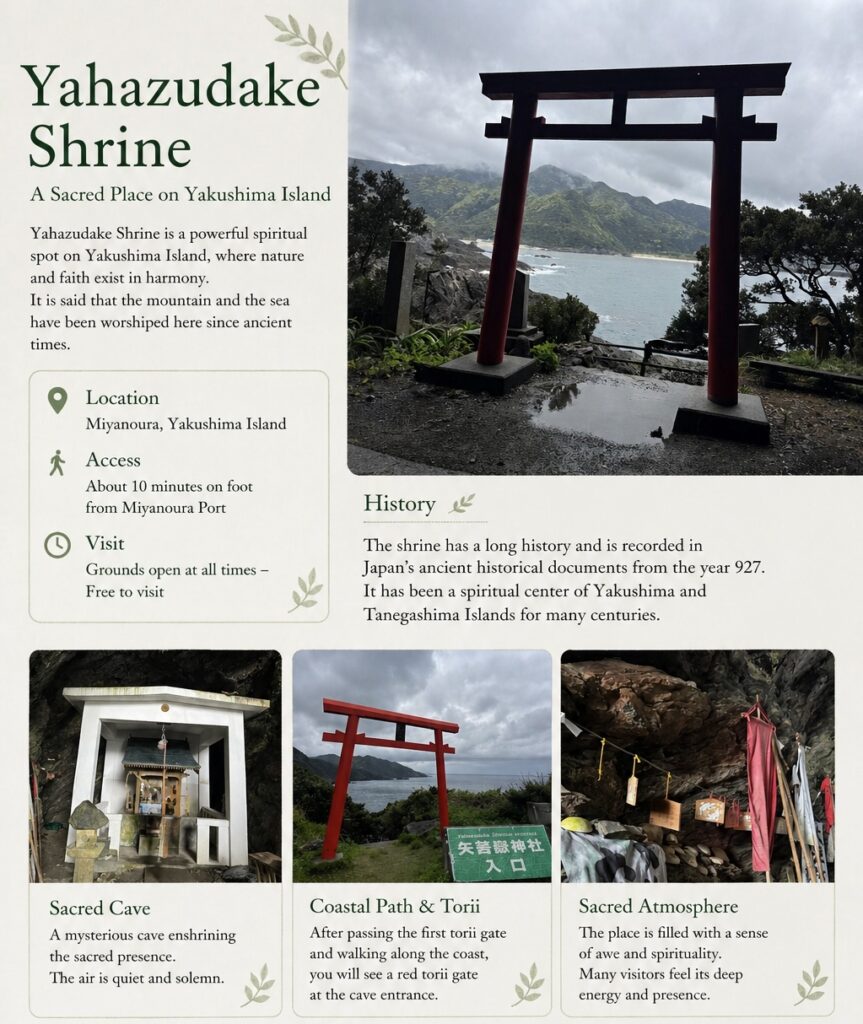
Yahazudake Shrine (矢筈嶽神社)
Our first stop was unlike any shrine I’d visited before. 📍Yahazudake Shrine is built inside a sea cave — you walk down toward the coast, follow a path along the water, and suddenly a red torii gate appears at the entrance to a cave. Walking in alone would be a little eerie, honestly. 😄 The atmosphere is deeply spiritual and mysterious.
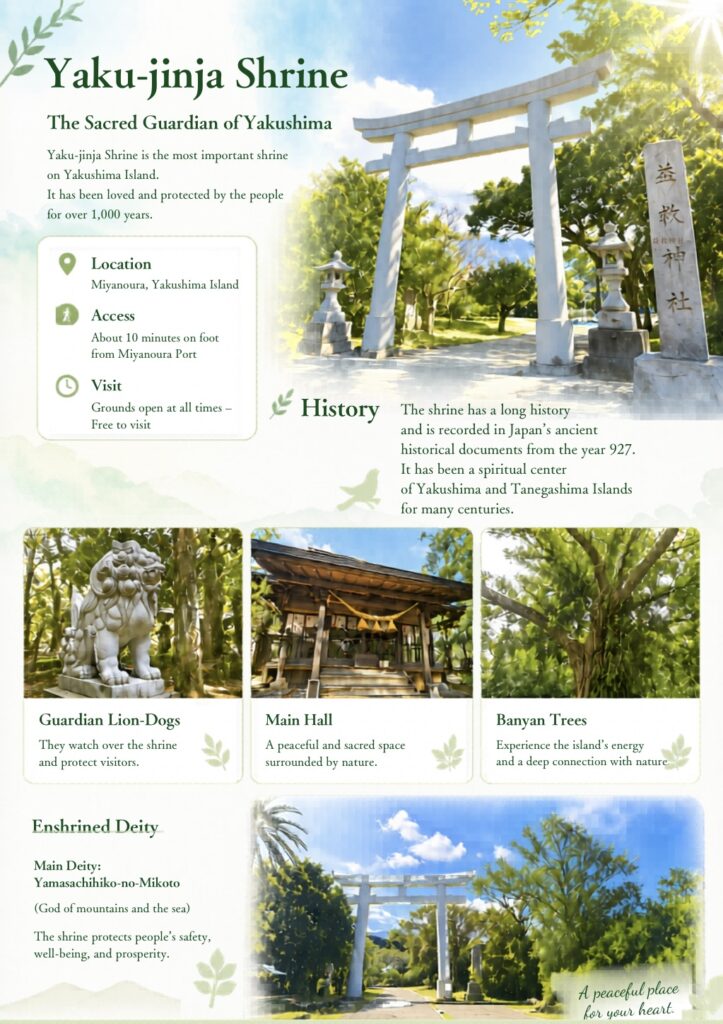
Yaku-jinja Shrine (益救神社)
Next, we made our way to 📍Yaku-jinja Shrine (益救神社) near Miyanoura Port. By the time we arrived, the morning’s storm had completely vanished. The sky was calm, the wind had settled, and everything felt peaceful.
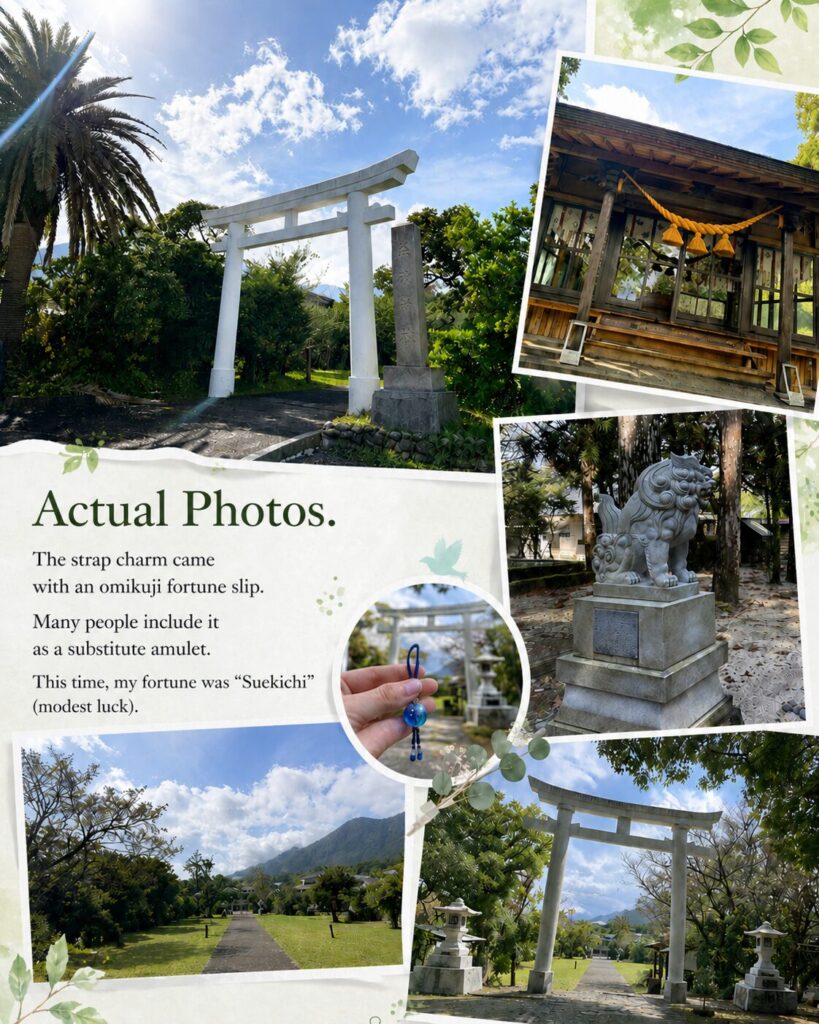
What struck me first was the entrance: a stone torii gate standing beside a tall palm tree. 🌴 A Japanese shrine with a tropical twist — I’d never seen anything like it. The main hall has glass panels that let you see inside clearly, which felt refreshingly modern and beautiful.
The goshuin (shrine stamp) was a pre-written paper version rather than written on the spot — which I’ll admit was a little disappointing. But the charm selection more than made up for it. So many varieties to choose from!
I decided to try the omikuji (fortune slip). I picked the one that comes with a tondama — a small, gorgeous glass bead strap as a bonus gift. My result: Suekichi (末吉) — modest luck. Not bad! 🍀

Final Stop: Senpiro Falls (千尋の滝)
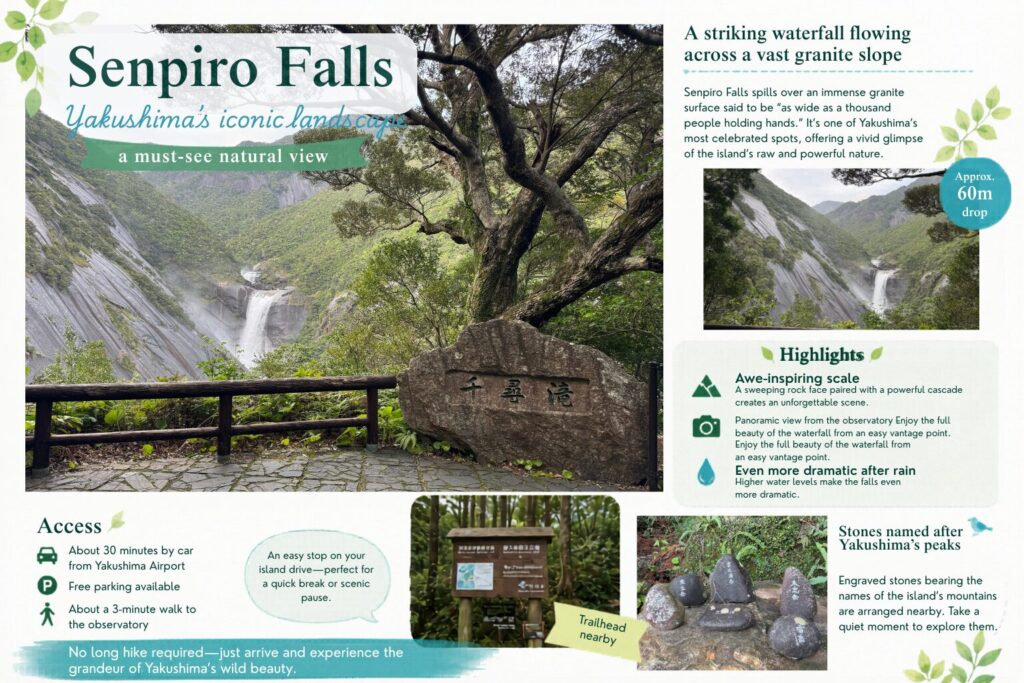
To wrap up the day, we drove from the coastal road up into the mountains to visit Senpiro Falls — one of Yakushima’s most iconic natural landmarks.
The road gets narrow as you climb, but opens up to a wide parking area. From there, it’s only about a 5-minute walk to the viewing point. And then — wow. A massive curtain of water dropping approximately 60 meters down an enormous granite face. The scale is hard to describe. You just have to see it.
Before we knew it, the day was over and we were heading back to the hotel. What started as a typhoon had turned into a wonderful day full of surprises. ✨
Later, we heard that all flights into Yakushima that day had been cancelled. Everyone who planned to arrive on Day 2 couldn’t get to the island at all.
A local told us: “If you can’t get on the island, it just means the island wasn’t calling you yet.”
I felt truly lucky to have been called. 🌿
→ Part 2: The Jomon Cedar Hike — 22km through an ancient cedar forest, in the rain. The main event. Coming soon!

📢 Disclosure: This post contains Amazon affiliate links. If you purchase something through these links, I may earn a small commission at no extra cost to you. Thank you for supporting ASARI JOURNAL!
Comments